
When families move to the UAE, one of the first decisions they face is about education. With many schools offering different types of programmes, the British curriculum remains a top choice. But what makes it so trusted by parents around the world?
Let’s break it down in clear and simple terms.
What is the British Curriculum?
The British curriculum, also called the National Curriculum for England, is a well-structured learning plan followed by schools in the UK and abroad. It outlines what students should learn at each age and how schools should teach and assess progress.
It is built around age-appropriate Key Stages and aims to provide a solid foundation for academic growth, personal development, and life skills.
Why is the British Curriculum Popular in the UAE?
Families in Dubai and across the UAE often choose British education for its:
- Clear structure and predictable progression
- International recognition of qualifications (like GCSEs and A-Levels)
- Strong focus on communication, critical thinking, and problem-solving
- Smooth transitions for students who may relocate to or from the UK
Over 12,000 schools globally follow the British curriculum, with hundreds in the UAE.
UK Education System Overview
The British school system is divided into clear stages:
- Early Years Foundation Stage (EYFS): For ages 0–5
- Primary Education: For ages 5–11
- Secondary Education: For ages 11–16
- Post-16 Education (Sixth Form): For ages 16–18
This structure is followed consistently in British and British-based international schools around the world.
British School Curriculum Structure
The curriculum is divided into Key Stages:
- EYFS (0–5 years): Focuses on play-based learning and early development
- Key Stage 1 (5–7 years): Introduction to reading, writing, numbers, and creativity
- Key Stage 2 (7–11 years): Builds on core subjects with a wider knowledge base
- Key Stage 3 (11–14 years): Students explore more subjects in depth
- Key Stage 4 (14–16 years): Leads to GCSE qualifications
- Key Stage 5 (16–18 years): Prepares students for university with A-Level exams
Each Key Stage has expected outcomes for what students should know and be able to do by the end of that stage.
Key Stages Explained Simply
Key Stages act like milestones. At each stage, students are assessed to see how well they understand the subjects. These stages also help teachers know when and how to offer more support or extra challenges.
GCSE and A Levels Overview
At the end of Key Stage 4, students take the General Certificate of Secondary Education (GCSE) exams. These are subject-specific tests that assess knowledge and skills.
In Key Stage 5, students choose subjects for A-Levels. These are advanced qualifications often required for university admission in the UK and many other countries.
Subjects Covered in the British Syllabus
Students learn a balanced mix of subjects across all stages. These usually include:
- English
- Mathematics
- Science
- History and Geography
- Art and Design
- Physical Education
- Computing
- Music
- Modern foreign languages (from Key Stage 2)
Schools may add subjects based on local needs and culture, but the core always remains strong.
How Are Students Assessed?
The assessment system in British schools uses both classroom performance and formal testing. Teachers observe, give feedback, and check understanding regularly.
Formal assessments happen at the end of each Key Stage. In EYFS, assessments are informal and focus on development rather than tests.
What Outcomes Can Parents Expect?
The learning outcomes of the British curriculum include:
- Clear academic skills
- Personal confidence and independence
- Social development and moral values
- Preparation for global careers and further education
Students develop steadily across all stages, supported by regular reviews and open communication with parents.
British vs International Curricula
British and international curricula both support global learners. However, the British curriculum has a more defined path with recognised stages and exam boards. This gives families a sense of stability, especially those who often move countries.
Schools following international curricula may be more flexible, but the British system often appeals to parents who prefer structure and clear goals.
Why Parents in Dubai Choose Tappy Toes Nursery
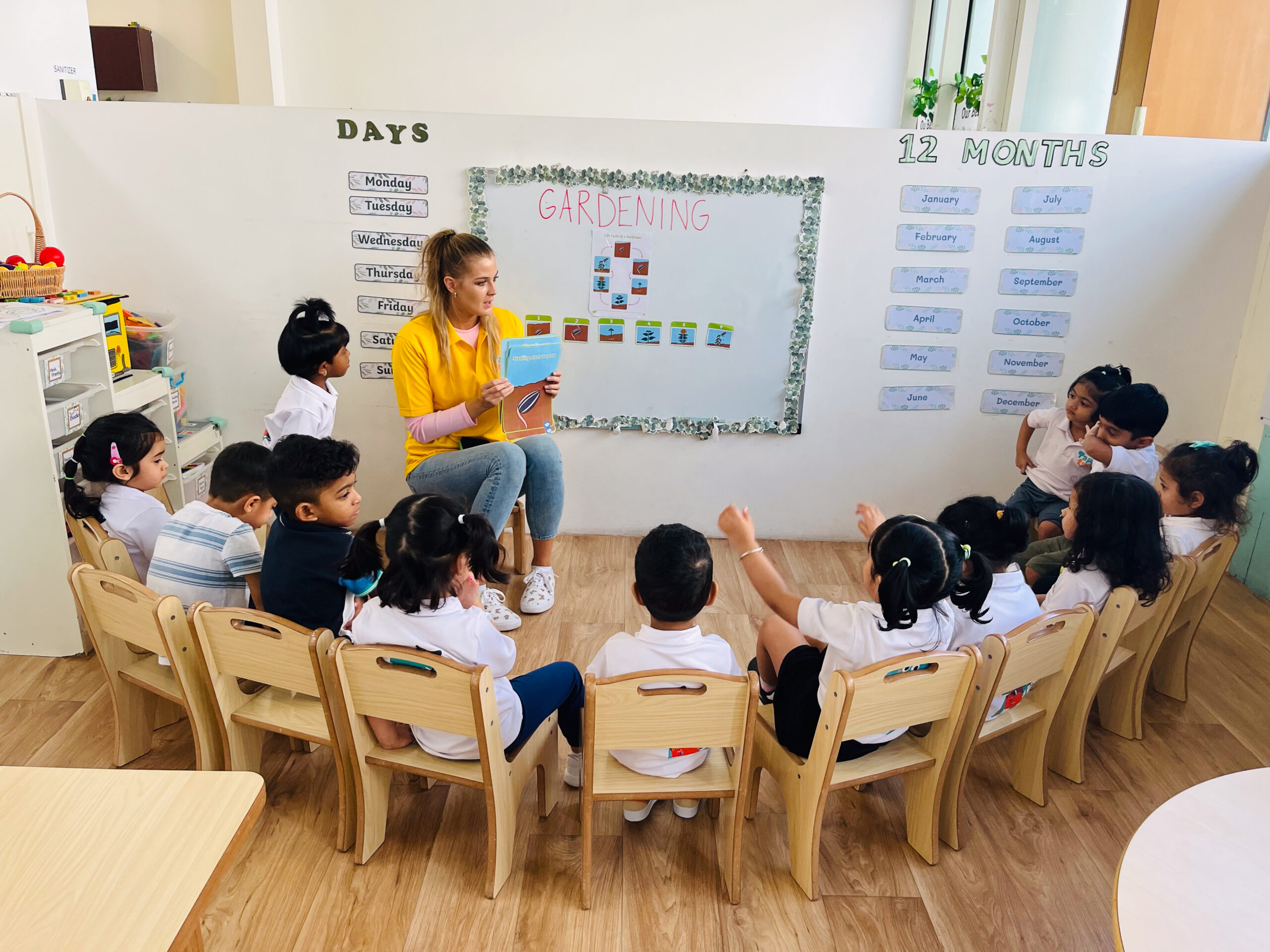
Tappy Toes Nursery follows the British curriculum with the EYFS framework, making it a strong choice for early years education. We blend this with aspects of Montessori and Reggio Emilia to support each child’s learning style.
Our CACHE-qualified teachers focus on nurturing young learners through play, exploration, and personalised attention. We also work closely with parents, offering a true partnership that supports every step of your child’s growth.
With branches in Dubai South, Karama, Sharjah and Fujairah, we offer convenient access to quality care and education. Contact us for more information.
Is the British Curriculum the Right Fit for Your Child?
The British curriculum offers a clear, trusted path for learning. From the early years to secondary school, it helps children grow academically and personally.
Whether you are a parent new to Dubai or exploring school options for your little one, understanding the British curriculum can help you make an informed choice. It provides the tools, structure and values children need to thrive in today’s world.
Frequently Asked Questions
Is the British curriculum accepted by UAE schools and universities abroad?
Yes. The British curriculum is recognised by the UAE Ministry of Education and accepted by universities in the UK, the US, Canada, and many other countries.
How does EYFS in the British curriculum support early learning?
EYFS focuses on play-based, child-led learning. It supports language skills, physical development, social growth, and early problem-solving.
Are there Arabic and Islamic studies in British curriculum schools?
Yes. In the UAE, British curriculum schools offer Arabic and Islamic education in line with local regulations, especially for Arab and Muslim students.