A provision area is a purposefully set-up space in a nursery where children explore and learn with real independence. If you have ever walked into a nursery and seen sandtrays, art stations, and role-play corners and wondered what they actually do for your child, you are asking the right question. Here are 10 things that will change how you see those spaces.
What Does Provision Actually Mean?
Educational provision meaning, in plain terms, is this: the spaces, resources, and activities a nursery sets up to support every part of a child’s growth. Not just letters and numbers. Emotional, social, creative, and physical growth too. Educational provision is not a single corner of a room. It is the whole learning environment, every shelf, every tray, every table, working together. The EYFS framework guides how strong provision is designed in Dubai nurseries, and it covers all seven areas of learning in one joined-up approach.
10 Essential Things to Know About Provision in Early Childhood
1. It is purposeful, not accidental
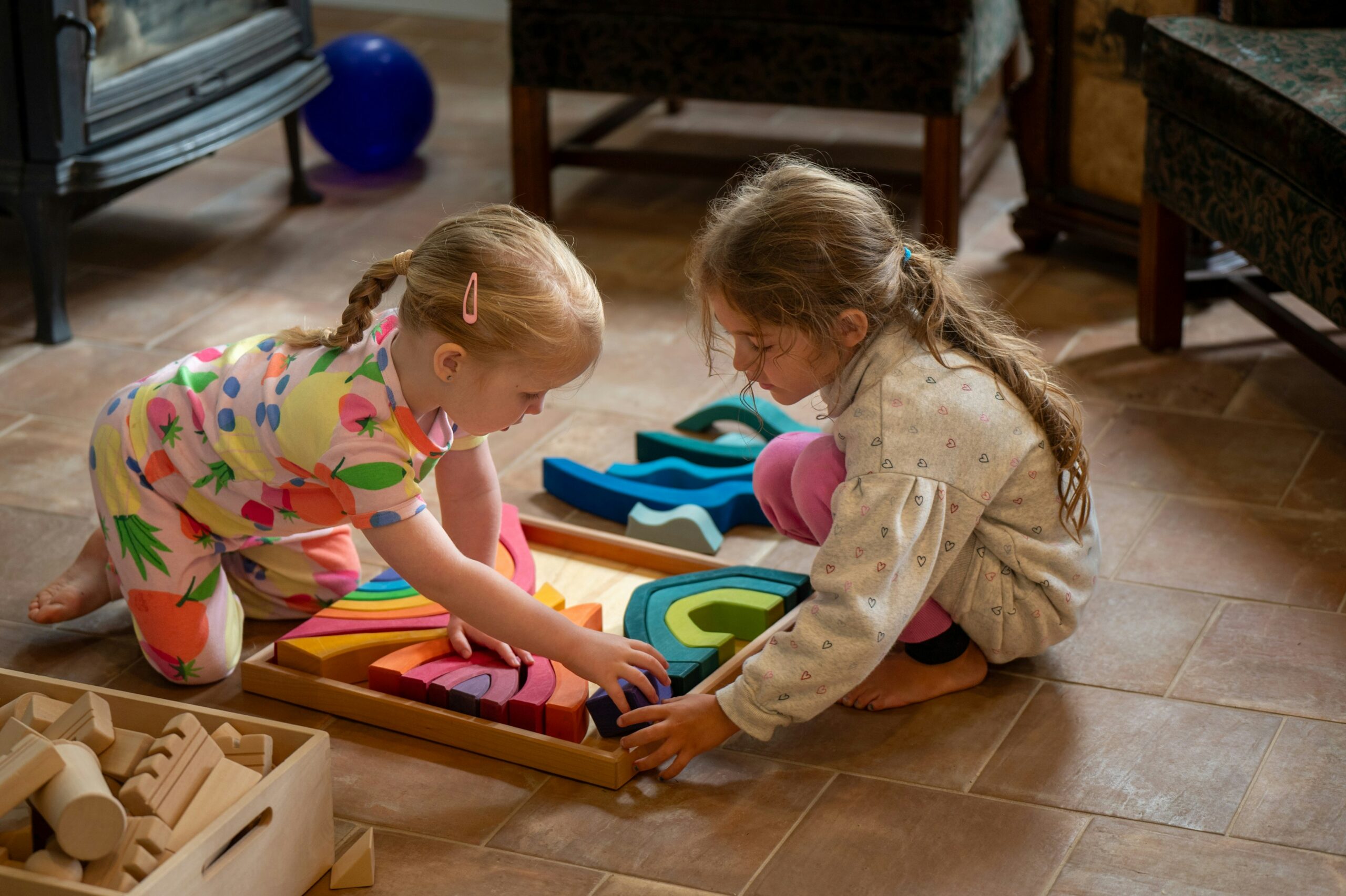
Every resource in a provision space is placed with intent. A sandtray is not there to keep kids busy. It builds fine motor skills, sensory awareness, and early mathematical thinking. Teachers plan what goes into each area based on where children are in their development and what they need to stretch next.
2. Children lead. Adults support.
Provision is child-led by design. Little ones choose where to go and how long to stay. The teacher’s role shifts from instructor to observer, watching, noticing, and stepping in gently to extend learning when the moment is right. This builds real independence, which is one of the clearest signals of school readiness.
3. There are two main types: continuous and enhanced
Continuous provision refers to the areas always open to children every single day, things like the book corner, construction zone, role-play area, and creative table. Enhanced provision refers to additions that change regularly, often linked to a theme the class is exploring that week. Both types work together. They keep the environment fresh without making it unpredictable.
4. A provision area covers all seven EYFS learning areas at once
This surprises most parents. A well-designed provision area does not teach one thing in isolation. A water tray, for example, supports communication (talking about what is happening), physical development (pouring, controlling movement), mathematical thinking (full, empty, more, less), and science (what floats, what sinks). Four learning areas. One corner of a room. That is the point.
5. Sensory play is a foundation, not a bonus
Sand, water, playdough, and textured materials are not extras. For children under five, the brain processes the world through the body long before it processes it through language. Sensory play builds neural pathways that support attention, self-regulation, and early literacy. Skip it, and you skip some of the most key brain-building work of the early years.
6. Role-play areas build social and emotional intelligence
When a child plays “home corner” or “shop” or “doctor,” they are rehearsing real life. They practise negotiation (I want to be a doctor), empathy (caring for a patient), and problem-solving (what do we do when two kids want the same role?). These are not soft skills. They are the exact skills that shape how children handle relationships for the rest of their lives.
7. Outdoor provision matters as much as indoor
Many parents in the UAE link learning with indoor, desk-based activity. Outdoor play challenges that view. Fresh air, physical risk-taking, and nature-based exploration build gross motor skills, confidence, and spatial awareness in ways no indoor space can fully replicate. Even in a Dubai climate, good nurseries make outdoor time happen every day through morning sessions and shaded areas, year-round.
8. Good nursery provision is never set and forgotten
Strong nursery provision is always being watched, assessed, and adapted. Teachers observe how children engage with every space. If kids stop going to the construction area, something needs to change, whether that is new resources, a new challenge, or a different layout. Provision is a living environment that responds to the children using it. Not a static display.
9. Provision is not separate from curriculum. It is a curriculum.
One big misconception about the EYFS model is that provision of education only happens during lesson time. In early years, the provision of education is continuous. Little ones are building skills the whole time they are in the nursery, whether an adult is present in that moment or not. Every space is a lesson. Just without a timetable.
10. You can extend it at home
Parents do not need expensive equipment to mirror what happens at nursery. A small reading corner, a tray of dried pasta and measuring cups, a box of old clothes for dressing up, these are all simple provision ideas that extend learning between sessions. Ask your child’s teacher what area they are currently drawn to and build something similar at home.
How We Do Provision at Tappy Toes Nursery
At Tappy Toes Nursery, our teachers review every provision area at the end of each week and adapt it based on what they have observed. Our KHDA-approved curriculum follows the British EYFS framework, but the resources we choose reflect our multicultural Dubai community, books, materials, and play props that children from many different backgrounds can see themselves in. Our indoor and outdoor provision areas run every day, being mindful of the season, because we believe both environments shape how kids grow. That is not a policy. It is how we work.
Want to see our provision areas in action? A nursery tour at Tappy Toes Nursery lets you walk through every space, ask questions, and watch children engage with the environments in real time. Get in touch with our team today to book a tour at our Dubai South, Karama, Sharjah, or Fujairah branch. We would love to show you around.