Your kitchen bin is full of craft supplies. You just haven’t looked at it that way yet. These recycling ideas for kids work with what UAE families actually throw away e.g. juice cartons, water cooler caps, egg cartons, cereal boxes, date tins. No craft store trip needed. This list covers nursery age all the way to secondary school, with every project matched to the age that can do it.
Why Recycling Ideas for Kids Actually Work at Home
The best craft supply in your kitchen is the one you were about to throw away.
A craft kit gives a child one outcome. A toilet roll gives them a hundred. It can be a telescope, a rocket, a puppet, or a person. The child decides, not the instructions. That open-ended thinking builds problem-solving and hand strength in early years. Choosing what to make, planning how to do it, fixing it when it falls apart: that is real cognitive work at the kitchen table.
Children under six are still developing grip, finger control, and spatial reasoning. Tearing newspaper, squeezing glue, pressing bottle caps. These are the fine motor actions that EYFS frameworks are built around. You do not need a formal activity. You need a cardboard tube and 20 minutes.
10 Recycling Ideas for Kids (by Age Group)
Most recycling idea lists give you 40 options and zero help choosing. This one gives you 10, matched to your child’s age. Every project uses materials found in a UAE household bin and needs nothing from a craft shop.
- Egg Carton Caterpillar (Ages 2-4): Egg carton, paint, googly eyes. Cut the carton into a long strip, paint each cup a different colour, stick on the eyes. Done in 20 minutes. Perfect first project.
- Cardboard Tube Binoculars (Ages 3-5): 2 toilet rolls, tape, paint. Tape the rolls side by side, let your child decorate them, then head outside for a garden safari. Mynahs and sparrows in Dubai make surprisingly good targets.
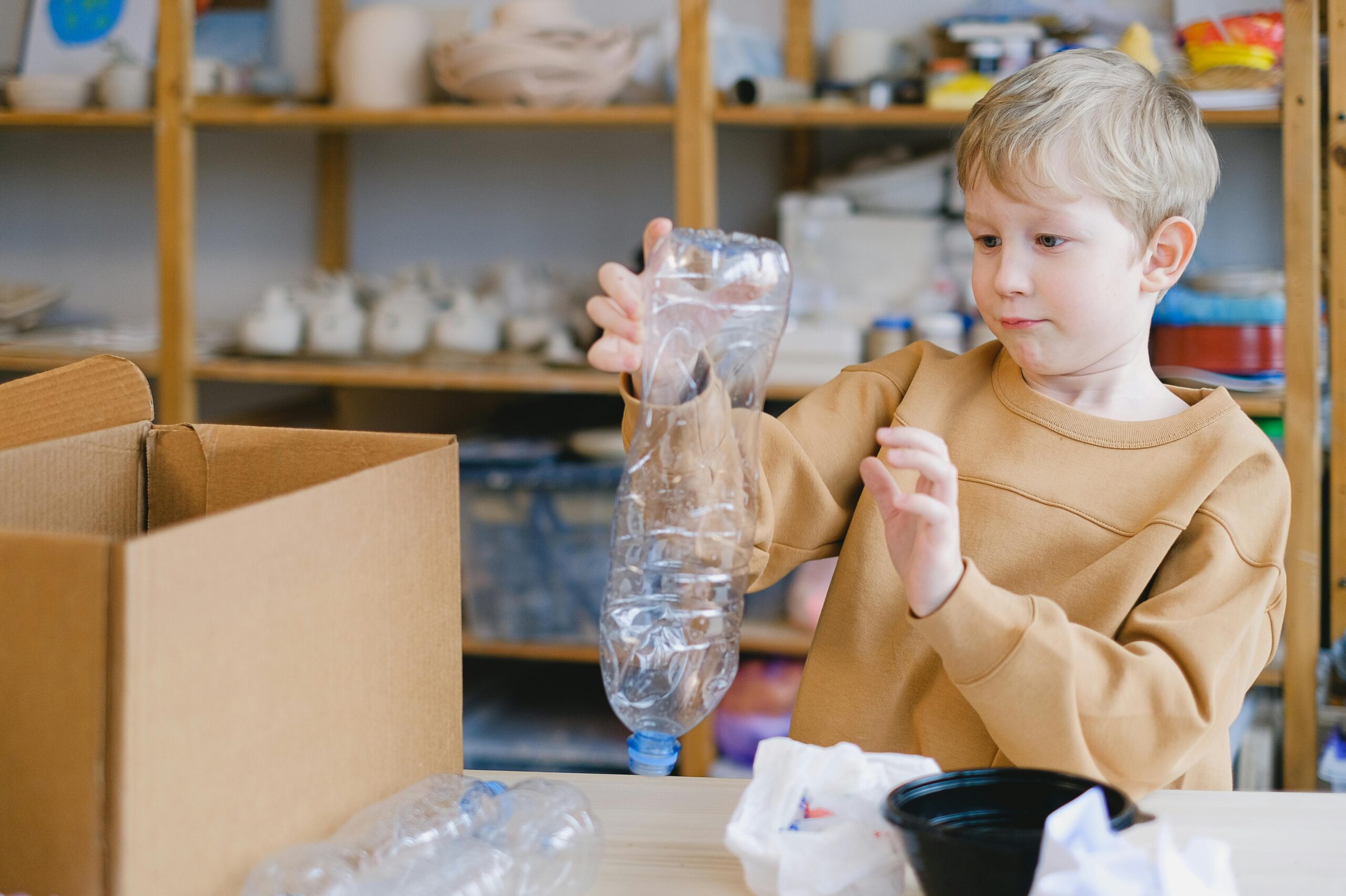
- Plastic Bottle Bird Feeder (Ages 4-7): Plastic water bottle, two sticks, birdseed. Cut two holes through the bottle, thread the sticks through for perches, fill with seed and hang on a balcony. Works well in apartments.
- Juice Carton Planter (Ages 4-8): Juice carton, potting soil, seeds. Cut the top off, fill with soil, plant cress or basil. Cress grows fast enough in the Dubai heat to hold a child’s attention for days.
- Tin Can Wind Chimes (Ages 5-8): Old tins, string, spare keys or metal scraps. Decorate the tins with paint, tie them at different heights from a stick, hang outside. Kids test which materials make the best sound. Good science. No kit needed.
- Cereal Box Puzzle (Ages 4-7): One cereal box, scissors. Draw a picture on the plain inner side, cut it into pieces, swap with a sibling to solve. Free to make, and keeps them busy longer than you expect.
- Bottle Cap Fish Mosaic (Ages 5-9): Water cooler caps, card, glue, paint. Arrange the caps into a fish shape on a card and glue them down. Painted and framed, this looks genuinely good on a bedroom wall.
- Newspaper Papier-Mache Bowl (Ages 7-11): Newspaper, flour-and-water paste, a balloon. Blow up the balloon, layer on paste-soaked newspaper strips, leave to dry for two days, pop the balloon. The wait is hard. The result is worth it.
- Cardboard Box City (Ages 5-10): Any cardboard boxes, tape, scissors. No instructions needed. Give them the materials and step back. A child who builds their own city out of delivery boxes will not ask you what to do next.
- Recycled Material Robot (Ages 9-14): Boxes, bottle caps, foil, cardboard tubes. This is the entry point for creative recycling projects for high school: structure it as a brief and ask them to build a robot that does one specific job. Students plan it, build it, and explain the function. Strong school project.
School-Ready Recycling Projects for Dubai Kids
Pick projects your child can talk about, not just hand in.
More and more UAE schools are setting recycling ideas for school projects as term briefs. A prompt to make something from household waste and present it to the class. The bottle cap mosaic, the papier-mache bowl, and the robot all work well here. They hold together, photograph clearly, and give a child something to explain. A child who can say “I layered newspaper strips because papier-mache is one of the oldest ways to reuse waste paper” walks into that presentation with real confidence. That’s different from handing in an egg carton caterpillar with nothing to say about it.
For younger children in nursery or reception, the caterpillar and the juice carton planter both work as show-and-tell pieces. Simple enough to build independently. Why does that matter? Because a project a child finished themselves carries more pride than one a parent completed at 11pm.
Start Small. Keep It Messy.
The project does not have to be perfect, the process is.
A child who spends 30 minutes tearing newspaper, pressing paste, and figuring out why the bowl keeps sliding off the balloon is building patience, fine motor control, and creative persistence. None of that shows up in the finished bowl. All of it stays with the child. That is what we see every day at Tappy Toes Nursery. The learning happens in the doing, not in the display.
Our EYFS curriculum is built around exactly this kind of hands-on, open-ended discovery. Our Continuous Provision Areas give children space to create, experiment, and build at their own pace. We have nurseries in Karama, Dubai South, Sharjah, and Fujairah. Book a visit to your nearest Tappy Toes Nursery and we will show you what your child’s day looks like.