
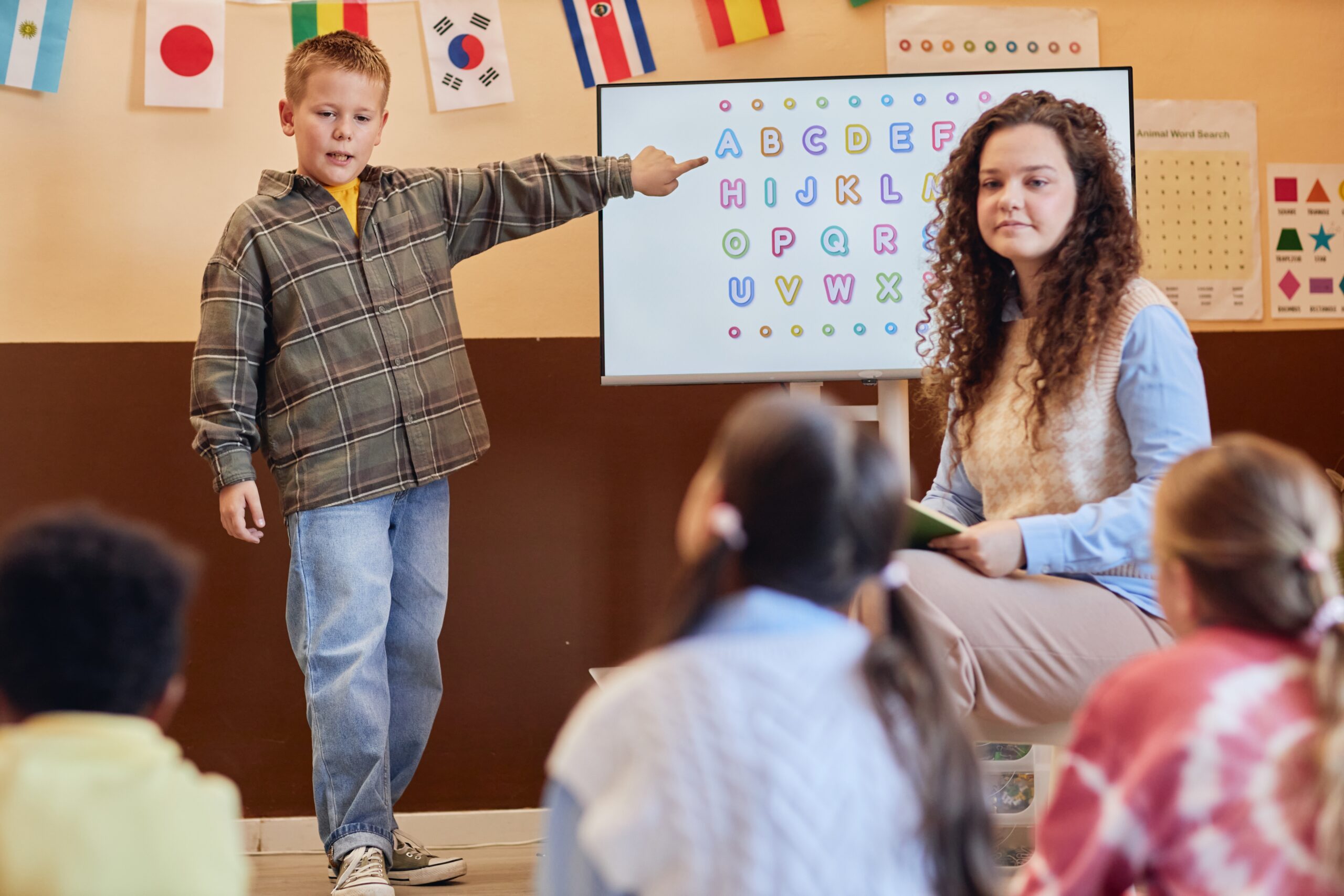
Parents know little kids have a lot to say. Sometimes they simply cannot wait to speak to you. Other times, you barely hear a word from them at all. It does not matter if your child is chatty or quiet. Both can learn to share their thoughts with real confidence.
This guide is about helping young children speak clearly and listen well. We focus on calm body language and kind listening in every setting. We also look at ways to build presentation skills step by step.
What are presentation skills for young children?
So, what are presentation skills for young children in simple terms? They are the skills that help kids share ideas others can understand. That means speaking at a steady pace and using gentle eye contact. It also includes listening to others and taking turns in groups.
Sometimes it is talking to a small group or sharing simple news. Sometimes it is describing a drawing or a picture from a book. All these moments slowly build language and grow confidence over time.
Why early communication skills matter so much
Why does this matter so much for your child? Strong speaking skills help children find their place in classroom life. They know how to ask for help and handle small problems. They can join games, share ideas and form real friendships at school.
Studies show that children with a rich vocabulary often do better in reading. They also tend to do better in maths and other subjects later. Research links early speaking and understanding with progress right through school. Many reports suggest that about one in five children falls behind in language. This is why communication skills for kids deserve steady attention every day. Supporting early years language development is one of the best investments.
When we encourage children to speak up early, we protect many parts of life. We support learning, friendships, and emotional well-being in one careful process.
How presentation skills training supports language growth
How does practising speaking in a structured way help children grow? Put simply, presentation skills training gives children regular chances to plan a speech. They think about what they want to say and then share it. With practise, they learn to breathe calmly and manage normal stage nerves. Over time, their vocabulary grows, and their sentences become much clearer. These gains often carry into listening, reading, and writing through primary school.
What good practice looks like in Dubai nurseries
The best nurseries keep activities short, gentle, and open to everyone. No child is forced to speak before they feel safe and ready. Teachers model good communication and invite children to join in slowly. It starts with daily chats, songs, and shared group stories in class.
Teachers may plan classroom confidence activities where each child shares something. Well-planned storytelling activities help preschool children organise their thoughts. Children learn to remember key details and speak in simple, clear sentences. These playful routines build confidence without pressure or fear for young children. They also develop strong public speaking skills that they need in later years.
How parents can support speaking confidence at home
You make the biggest difference to your child’s speaking confidence. Regular, relaxed conversations matter more than perfect grammar or fancy words. Invite your child to tell you small stories about their day. Ask open questions that help them think a little bit more. You could ask who they played with and what they enjoyed. You can also ask what felt hard or confusing during the day.
These simple questions stretch their ideas and build deeper thinking skills. Reading together is another powerful tool you can use every day. After a story, ask your child to retell it in their own words. You can also ask what they think about a character’s choices. These small routines make speaking up in groups much easier later. They are steady, confidence-building activities that children benefit from over many years.
Here are some easy ideas you can try at home:
- Share daily highs and lows during dinner or snack time together.
- Give your child time to answer without jumping in too quickly.
- Praise effort, not perfection, when your child tries to speak up.
- Turn off screens for a while and enjoy simple family conversations.
Why many families choose Tappy Toes Nursery
Tappy Toes Nursery truly cares about communication and confidence. The certified and experienced teachers keep class sizes small, so they know each child well. Children enjoy stories, songs, and group games that invite them to share. Activities feel gentle and safe rather than strict or pressuring for children.
Staff also support parents with clear ideas to keep progress moving at home. This close teamwork helps every child feel noticed, supported, and respected daily. It also keeps presentation skills training connected between nursery and family life.
If you want thoughtful speaking practice, this kind of setting feels reassuring. Your child meets caring adults who listen and guide instead of rushing. They feel brave enough to share ideas even when they feel unsure. Contact for more information.
Final thoughts
In the end, confident communication grows from many small caring moments. It happens at home, in nursery, and in the wider community. Strong speaking skills open doors in reading, writing, and every subject later.
For families in Dubai and across the United Arab Emirates, these skills matter greatly. With steady support, every child can slowly find and strengthen their voice. The goal is not perfect speeches or polished performance in early childhood. It is steady progress and real self-belief that lasts into adult life. When children feel safe to speak, that confidence travels wherever they go.
Frequently Asked Questions
At what age can children start simple presentation activities?
Most children can start very gentle sharing activities around three or four. At this age, sessions should stay short and playful, with no hard pressure. Focus on songs, simple show and tell, and group story participation first. If your child seems anxious, keep things slower and stay close for comfort. Over time, their confidence usually grows as activities become part of routine.
How often should my child join speaking activities each week?
Short, frequent chances to speak usually work better than rare big events. Daily small moments, like sharing news or choosing songs, build steady confidence. Nurseries often weave speech practice into many lessons rather than one subject.
At home, you can add two or three focused chats each day. These regular pockets of attention show your child that their voice truly matters.
What if my child has more than one home language?
Many Dubai families use more than one language in daily home life. This can actually support strong thinking skills and flexible communication patterns long-term.
You can encourage speaking practice in any language your child feels comfortable using. Clear, warm interactions matter more than sticking to one strict language all day. If you have concerns about development, speak with your nursery teacher or paediatrician.