
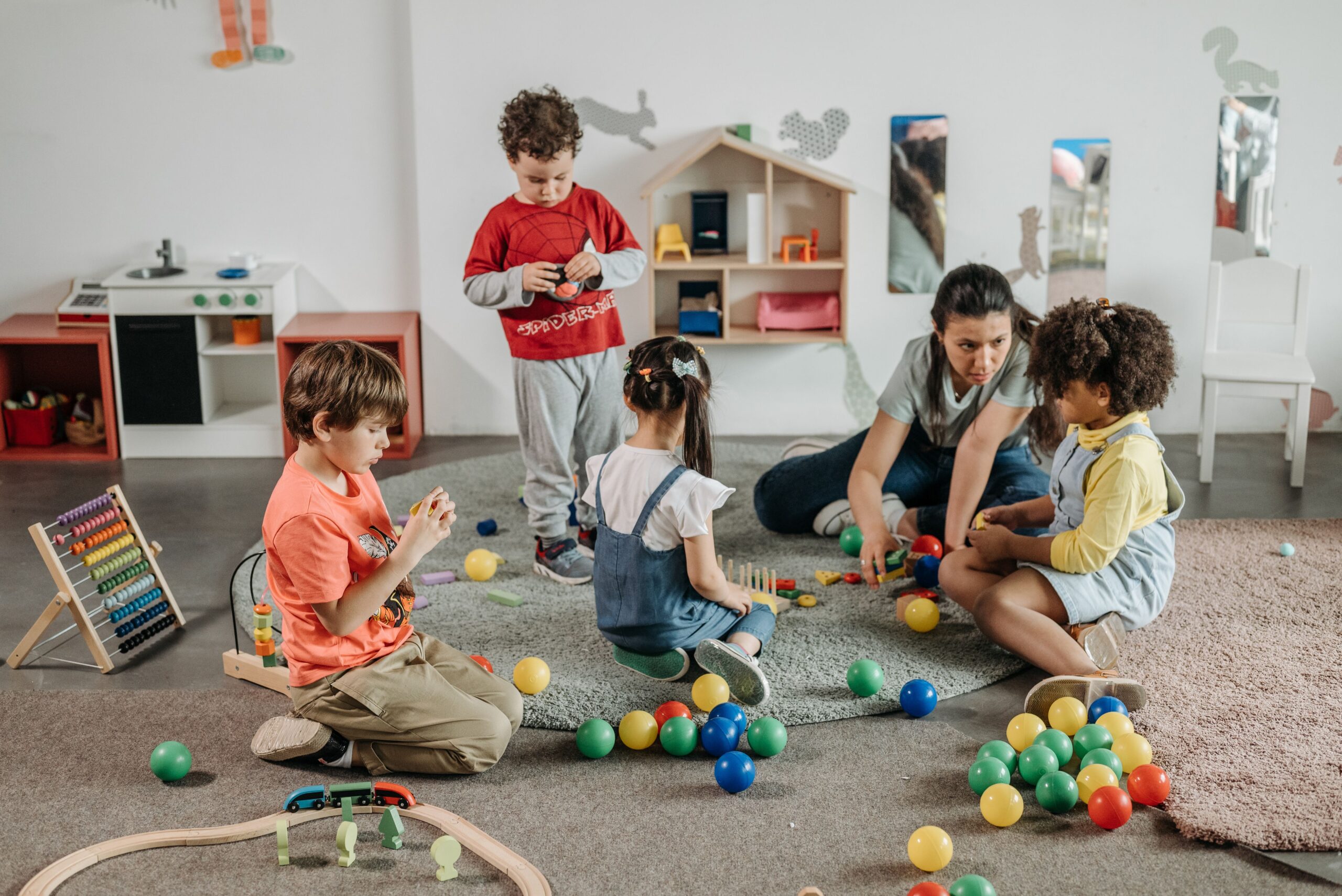
Play is not a break from learning. It is learning. When a child builds a tower, they test physics. When two children argue about who plays the teacher, they learn to work things out. The importance of play in child development has been studied for decades. The result never changes. Children who play well, grow well. Here is what play does for your child and why it matters more than most parents realise.
Play Is How Children Are Wired to Learn
Children’s brains grow faster in the first five years than at any other point. Every game, every mess, every made-up story fires new links. The child stacking blocks is building spatial skills, hand control, and patience all at once. Play doesn’t look like school. That’s the point.
The importance of play in early childhood development sits at the core of the EYFS framework. This approach shapes nursery teaching across the UAE. Learning through play lets children take in language and solve problems. They handle feelings too, without the weight of a formal lesson. They don’t know they’re learning. But they are.
Four Benefits That Go Deeper Than You Think
Most parents know play is good. But why exactly does it matter so much? The long-term gains go much further than a happy child with busy hands. Here are four things play builds that last.
- How they talk. Children talk all the time during play. They claim roles, pick up new words, and learn to listen. None of it feels like practice. All of it is.
- Handling feelings. Pretend play gives children a safe space to test emotions. A child playing “hospital” might be working through a doctor’s visit that scared them. Play handles what words can’t.
- Creative thinking. Children who play freely build stronger problem-solving skills at school. Research from the American Academy of Pediatrics confirms this every time.
- Body control. Running, climbing, moulding dough, stacking blocks. Every physical game builds fine and gross motor skills children carry their whole lives.
The list looks simple. The long-term impact is not.
The Types of Play That Shape Who Your Child Becomes
Your child picks up a stick. Suddenly it’s a fishing rod, then a magic wand, then a sword. That’s child-led play at work. Free play builds self-trust, bold ideas, and the habit of choosing without a prompt. Most children in structured settings get too little of it.
Role play works differently but just as powerfully. When children play “school” or “family” or “shop,” they rehearse real life. They step into someone else’s shoes and feel what that’s like. Sharing, taking turns, and dealing with small setbacks all follow naturally. Or they fall out over who’s the teacher and have to work it out. That matters too.
Sensory and building play rounds it out. Sand, dough, water, blocks. These build focus and fine motor skills in ways that worksheets simply can’t. They also calm children. Parents often notice a settled child after twenty minutes at the dough table. It’s not just an anecdote. There’s real science behind that.
What Your Child’s First Day at Nursery Actually Looks Like
Who feels it more, the child or the parent? Honestly, it’s close. The nursery 1st day at school marks a huge moment for every family. We know parents carry a lot of the weight. At Tappy Toes Nursery, that first morning is built around play, not performance. Children walk into a space with zones set up to invite them in. Teachers greet each child by name. Routines settle fast. Most children feel at home by the end of the first week. They follow their curiosity, not a timetable.
Our parent partnership means you won’t be left guessing. We send daily updates, share photos, and flag anything that needs a chat. We don’t just send notes home. We talk with you. That matters a lot.
How We Put Play at the Heart of Everything
At Tappy Toes Nursery, we believe the importance of play in early childhood education is not a trend. It’s a principle. Every space in our nursery was built around it. The library corner invites early reading. Our Montessori area supports child-led discovery. Outdoor zones build physical confidence and bold movement. CACHE-qualified teachers guide with care, not by getting in the way. That balance matters.
Our programmes run from 3 months through Foundation Stage 2, across our Dubai, Sharjah, Karama and Fujairah branches. Babies, toddlers, and young children all grow through play in ways right for their age. The support shifts as they grow. The belief never changes. A child deep in play is a child deep in learning.
Every block stacked, every role played, every splash at the water tray. All of it shapes who your child is becoming. The best time to see it is now. Book a nursery tour at our Dubai, Sharjah, or Fujairah branches. Walk through the spaces where your child’s learning starts.