
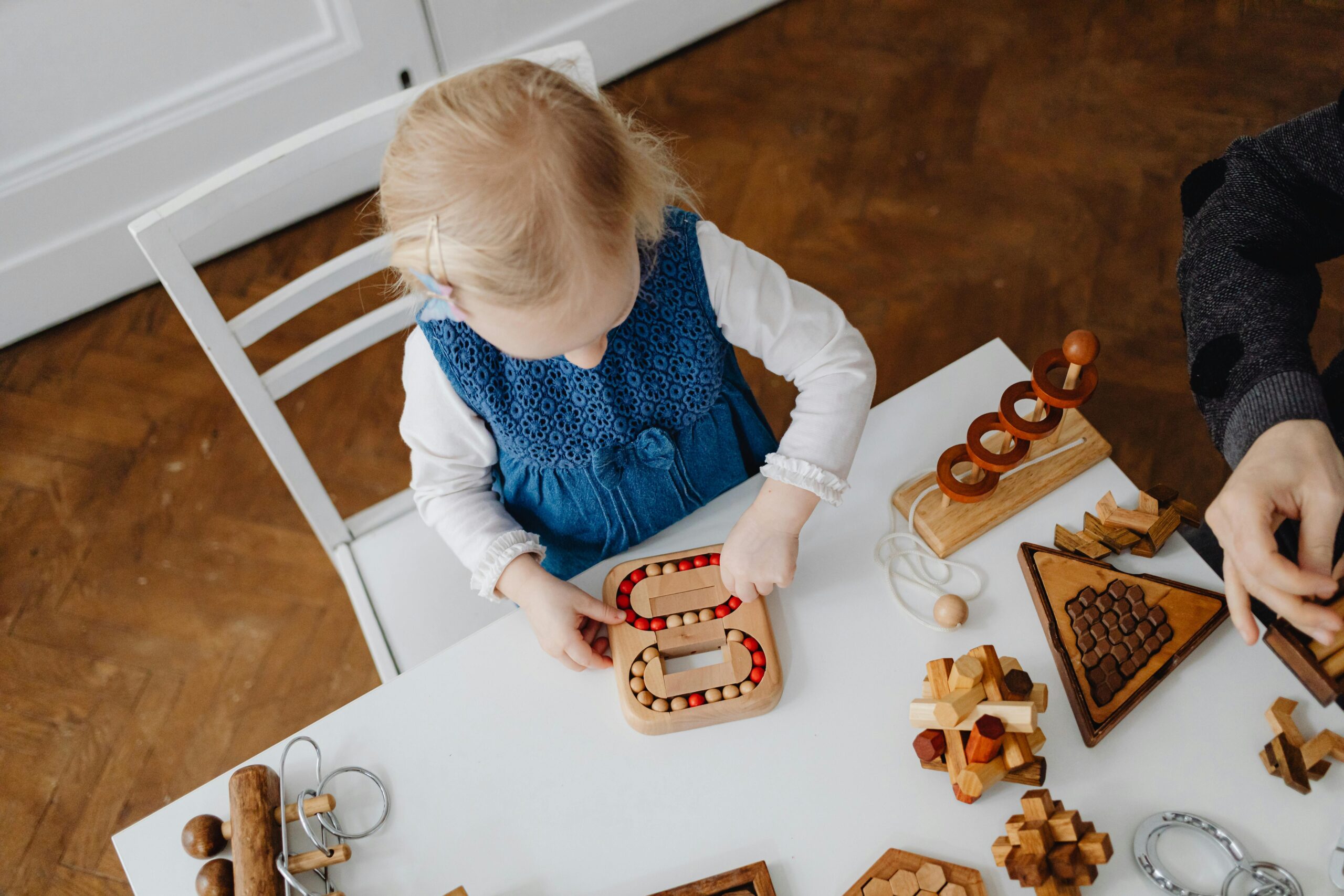
Problem solving skills start forming before a child can even tie their shoes. Yes, your three-year-old is already building the brain connections that will shape how they handle challenges for the rest of their life. The question is not whether they are learning to problem solve. It is whether the people around them are helping that process along.
Ages three to five are a critical window. At this stage, a child’s brain is building neural pathways faster than at almost any other point in their life. Every time your child tries something, fails, and tries again, those pathways get stronger. In Dubai, where we are raising children who need to think independently in one of the most fast-moving cities in the world, that early foundation matters more than most parents realise.
Why Problem Solving Skills Matter at This Age
Picture your child at the nursery table, staring at a puzzle piece that will not fit. They try one way. Then another. Their faces scrunches up. That small moment is not frustration. It is learning. Problem solving skills for preschoolers develop exactly this way: through tiny, repeated attempts at figuring things out without an adult jumping in. The brain is not wired to learn from being told the answer, it learns by reaching for it.
Here is what builds when that process is supported:
- Confidence — Your child learns that challenges are not dead ends. They are puzzles with a solution.
- Adaptability — When plan A fails, they do not freeze. They try plan B.
- Creativity — Finding solutions requires thinking beyond the obvious. That habit starts young.
- Communication — Working through a problem with a friend means your child must say what they think and listen to another view.
- Independence — A child who can solve small problems at four is far better equipped to handle bigger ones at fourteen.
How to Teach Problem Solving Skills to Preschoolers at Home
Most parents’ first instinct is to help and that is actually the part to resist. What’s your instinct when your child gets stuck? For most of us, it is to step in fast and smooth things over. But when you solve the problem for them, you take away the only moment in which real learning was possible.
The better move is to stay close and ask questions. If your child is trying to stack blocks and the tower keeps falling, do not fix it. Say “What do you think happened there?” or “What could you try differently?” These are not trick questions. They are invitations to think. The goal is not to find the answer for your child. It is to show them that they are capable of finding it themselves.
This approach aligns with how quality early childhood education works in Dubai. Educators are trained to provide opportunities and step back, not to deliver solutions. The same principle works just as well at home. Let the attempt be messy. Let the frustration be real, that is where the thinking happens.
Critical Thinking Activities for Preschoolers That Actually Work
The best preschool problem solving activities do not look like learning at all. They look like play. And that is exactly the point. When a child is absorbed in play, their guard is down, their curiosity is up, and their brain is open. Critical thinking activities for preschoolers work best when the child has no idea they are doing something educational.
Here are six activities worth trying at home or at the park:
- Sorting and Categorising — Give your child a mix of buttons, coins, or fruit and ask them to group them however they like. There is no wrong answer. The act of deciding and organising builds logical thinking.
- Open-Ended Building Blocks — No instructions, no target shape. Just blocks and space. Ask your child to build something strong enough to hold a toy car, trial and error is the whole lesson.
- Story Sequencing with Picture Cards — Print or cut out a simple four-card story. Shuffle the cards and ask your child to put them in order. Then ask why. The reasoning matters more than the sequence.
- What’s Missing? Game — Set out five objects on a tray. Let your child study them. Cover the tray, remove one, and ask them to identify what’s gone. Memory and attention are the building blocks of critical thinking.
- Treasure Hunt with Simple Clues — Hide something and give your child one clue at a time. Even a two-clue hunt at this age requires following logic in sequence. It is also genuinely exciting.
- Hypothetical Scenarios — Ask “What would you do if your toy broke and we had no glue?” or “What if it rained on your birthday picnic?” These small questions train the brain to think forward rather than react.
What We Do at Tappy Toes Nursery to Build Problem Solving Skills
At Tappy Toes Nursery, we see this play out every single day. Our team does not rush to rescue a child the moment they get stuck. We watch, we wait, and we ask. Our classrooms are set up with open-ended play stations where there is no fixed outcome. A child might spend twenty minutes building a ramp for a toy car, adjusting the angle, testing it, starting again. To a passing eye, it looks like play. To us, it is the most focused problem solving we see all week.
We build problem solving skills into our daily routines as well. At tidy-up time, children figure out how to fit things back into boxes. At snack time, they work out how to open their own containers before asking for help. These are small moments, but they add up. Our approach is shaped by the KHDA vision of raising active, capable, curious learners. Every routine, every activity, and every gentle question from our educators is pointed at the same goal: a child who trusts their own thinking.
Signs Your Child’s Problem Solving Skills Are Growing
Progress in thinking is not always easy to spot. It does not come with a test score or a certificate. But if you know what to look for, you will start to notice it at home.
Watch for these signs:
- Your child tries a second or third way when the first attempt fails, instead of giving up or crying for help.
- They start asking “why” and “what if” questions more often than before.
- They offer solutions during small disagreements with siblings or friends.
- They talk themselves through a task out loud (“I’ll put the big ones first”).
- They stay with a difficult activity longer without getting frustrated and walking away.
Conclusion
The earlier your child learns to sit with a problem, the better they get at solving one. That is not a theory. We see it in our children at Tappy Toes Nursery every single term. Problem solving skills for preschoolers are not a bonus feature of early education. They are the foundation that everything else builds on.
If you want to see how we put this into practice, come and spend some time with us. Book a nursery tour at Tappy Toes Nursery and watch how we turn an ordinary Tuesday morning into a masterclass in thinking.