The best letter activities for kindergarten don’t look like lessons. They look like play. Your child digs through a sand tray. They jump across chalk letters on the floor. They roll playdough into the letter B. None of it feels like work. All of it builds the reading foundation they need before they ever open a book.
At Tappy Toes Nursery, we see this every day across our nurseries in Dubai. Children who play with letters first read with more confidence later. That’s the point of this guide.
Why Letter Knowledge Matters Before Reading Begins
Most children can sing the alphabet by age four. That doesn’t mean they know their letters. Singing A-B-C is a memory task. Picking the letter B out of a row of letters is a different skill entirely. Does that surprise you? It surprises many parents.
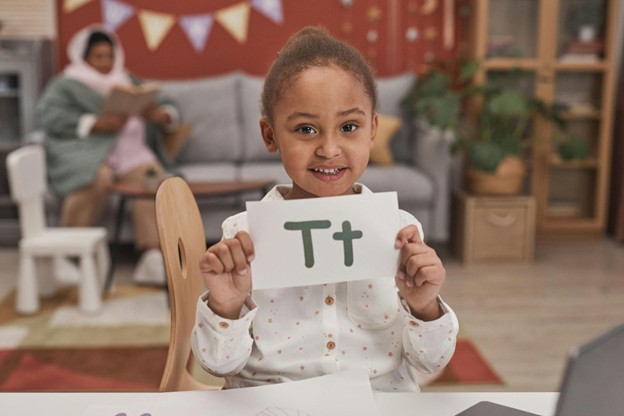
Letter knowledge means three things. What a letter looks like. What its name is. What sound it makes. In 2025, early literacy research confirms this clearly. Children who build all three before age six read more fluently in primary school. Good letter knowledge activities close the gap between naming a letter and using it to decode a word. That gap is where reading begins.
Sensory Letter Activities for Kindergarten Kids
Touch is one of the strongest memory tools a young child has. When your child writes the letter S in a salt tray, their finger traces the exact shape. The brain stores that movement. Pencil-on-paper tracing uses a different grip and a different level of focus. Kids who struggle with pencil work often get letter shapes far faster through touch. Not a gimmick. Motor memory at work.
At our Dubai nurseries, we use sand and salt trays daily for this reason. At home, you don’t need special equipment. A kitchen tray and a bag of table salt is enough. Set it up before breakfast. Let your child write, sweep, and try again. No rubbers needed.
Here are four sensory letter activities for kindergarten you can try at home today:
- Salt tray tracing: Pour salt into a flat tray. Call out a letter. Your child writes it with one finger, sweeps it clean, and tries the next.
- Playdough letter building: Roll playdough into long snakes. Shape them into letters together. One letter per session works best.
- Shaving cream writing: Spread shaving cream on a plastic tray. Your child writes letters with their fingers. The surface cleans itself.
- Wet sand stamping: Fill a small container with damp sand. Press plastic letter stamps in firmly, pull them out, and read what’s left.
Movement-Based Letter Activities Kindergarteners Love
Put letters on the floor. Children learn them faster. That’s not a theory. It’s what we see in our classes week after week.
Some children go blank during flashcard drills. The same children nail every letter the moment their whole body gets involved. Alphabet hopscotch works simply. Write one letter per square in chalk on the floor or path. Call a letter. Your child jumps to it. You can do this indoors with paper squares taped down. Letter yoga is another strong option. Assign a simple pose to each letter. Your child moves, says the letter, hears the sound. Three channels at once.
Three movement letter activities to try at home or at nursery:
- Alphabet hopscotch: Chalk or paper squares on the floor. Call a letter, your child jumps to it and says the sound aloud.
- Letter freeze dance: Play music. When it stops, hold up a letter card. Your child freezes and shouts the letter name.
- Letter yoga: Assign a pose to each letter. Start with A through E. Add more as they grow confident.
Simple Letter Recognition Games to Try at Home
Not every letter game needs prep. That’s the point. You are not running a classroom. You are a parent with twenty minutes before dinner and a child who still has energy.
Letter I Spy is the easiest game in this list. Look around the kitchen. Say: “I spy something starting with the letter C.” Your child looks, thinks, and finds the cup. Or the cupboard. Or the cat. The game uses the room you are already in. Nothing to buy, nothing to print.
Uppercase and lowercase snap is worth keeping in a drawer. Write letters on index cards. Uppercase on white, lowercase on yellow. Shuffle and deal. Your child flips cards and shouts “Snap!” when a matching pair appears. Ten minutes to make. It lasts weeks.
A third option that works anywhere, including in the car is, alphabet letter hunt. Pick a letter before you leave the house. Count how many times you spot it on signs, shop fronts, number plates. No losing. No sitting still.
Start with one and see which one your child reaches for first.
How to Know Which Letter Activities Suit Your Child Right Now
Two quick checks. That’s all you need.
First: can your child point to a named letter in a row of five? If not, start with recognition activities. Sensory games, letter hunt, I Spy. These are the right tools right now.
Second: can your child recognise all letters but write them back to front? That’s a formation gap, not a recognition gap. Playdough shaping and tray tracing will help far more than another flashcard game.
If your child writes letters clearly but can’t connect them to sounds, the gap is phonics. Not more tracing. Most parents don’t know which of the three gaps they’re solving. Now you do.
Start With One Activity and Build From There
You don’t need to do all of this at once. Pick the activity that fits where your child is today. A salt tray if they are still building shapes. A movement game if they know letters but go blank when asked to write them. A letter hunt if they just need more practice in a way that doesn’t feel like study.
At Tappy Toes Nursery, our teachers use all three approaches across our nurseries in Dubai, Sharjah, and Fujairah. We match the activity to the child. If you’d like to know where your child is and what they need next, speak to our team. We are always happy to help.