
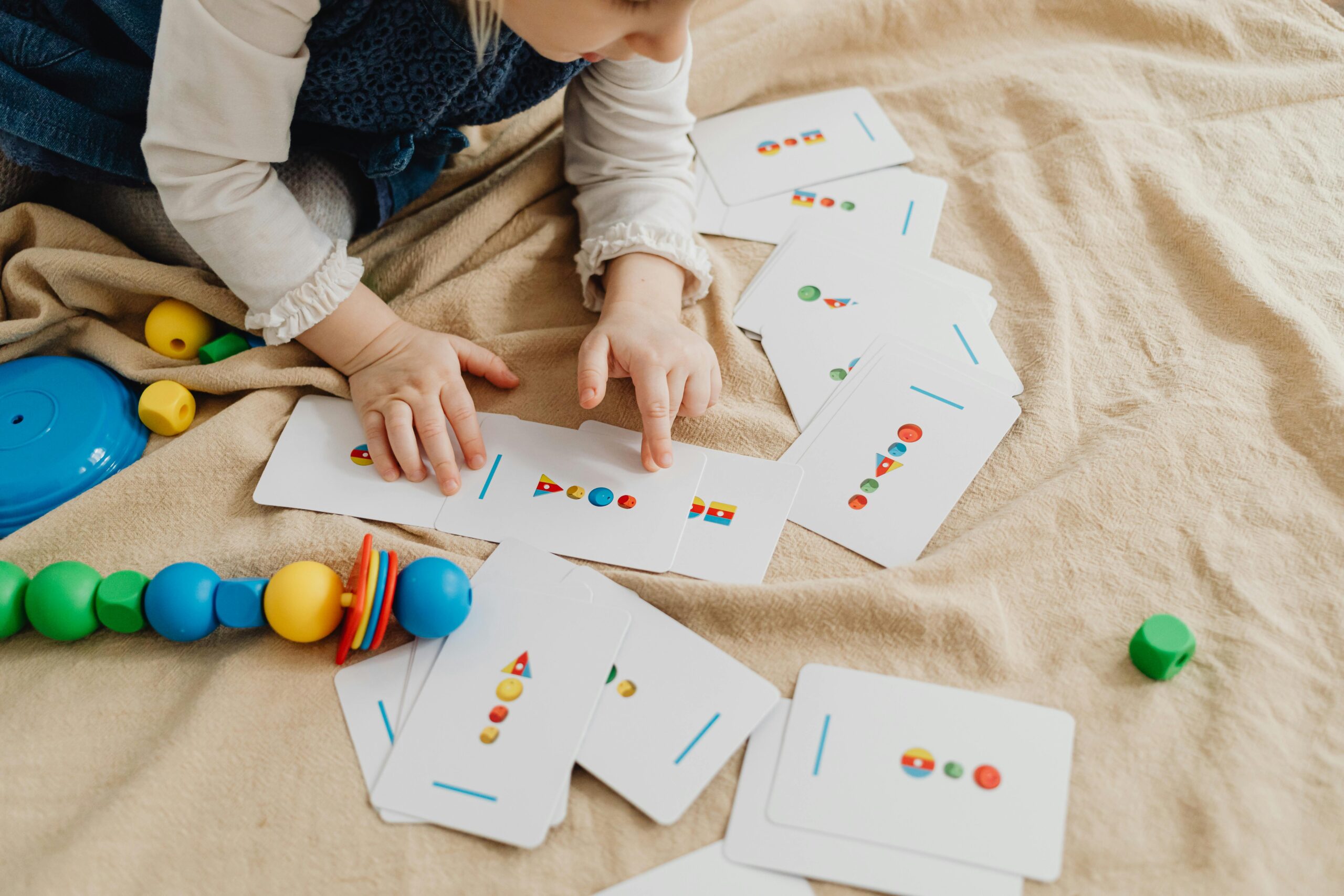
Pattern activities for kindergarten are one of the most powerful tools in early childhood education. Children don’t even realise they’re learning and they’re just playing. Sorting coloured beads, clapping in a rhythm, arranging fruit slices before snack time.
At Tappy Toes Nursery, we see this every single day. The moment a child predicts what comes next in a sequence, their eyes light up. That confidence? It carries into maths, reading, and beyond.
Why Pattern Recognition Matters in Early Childhood
Patterns are the building blocks of logical thinking. A child who can spot a repeating sequence is already doing early maths, even if no numbers are involved. They’re learning to predict. To notice order. To trust their own thinking. These are not small skills. They are the foundation that later maths and reading sit on.
Here in the UAE, quality early learning centres focus heavily on play-based cognitive development. It’s not about flashcards and drills. It’s about giving children real things to touch, arrange, and explore. Pattern recognition activities for kindergarten fit perfectly into this approach. Children practise logic through play, and that’s exactly where the deepest learning happens.
Fun Pattern Activities For Kindergarten at Home and in Class
Most parents assume pattern learning needs special equipment. It doesn’t. The best activities use things you already have around the house or classroom. A handful of coloured blocks. A row of shoes. Two types of fruit and that’s all it takes to get started.
We use these five activities in our classrooms every week.
- Bead threading. Give children two colours of beads and a pipe cleaner. Ask them to make a repeating pattern. Start with AB sequences (red, blue, red, blue). Once that clicks, try AABB. The threading itself builds fine motor control, so it’s always time well spent.
- Pocket chart shapes. Place coloured shapes in a pocket chart and leave a gap. Ask the child: what comes next? Let them place the missing piece themselves. It feels like a puzzle, not a lesson.
- Clap and stomp rhythms. No materials needed at all. Clap once, stomp once, repeat. Children mirror the pattern with their whole body. Vary the rhythm and watch how quickly they adapt.
- Clothespin ABC labels. Once children can identify a pattern visually, introduce letter labels. Red, blue, red, blue becomes A, B, A, B. This small step bridges concrete play and abstract thinking beautifully.
- Stamp printing strips. Use sponges, leaves, or bottle caps to print repeating patterns on paper. Children design their own sequence first, then commit to it. The pride when they hold up a finished strip is something you have to witness.
Children are curious about order far earlier than most adults expect. Give them the chance to explore it, and they run with it.
Easy Pattern Activities For Kindergarten Using Everyday Items
You don’t need to buy anything. Simple activities work brilliantly with objects already in your kitchen, classroom, or garden. The simplest materials often produce the best results. Children focus on the pattern itself rather than the novelty of what’s in front of them.
Try these four ideas with zero preparation:
- Snack time sequences. Before children eat, ask them to arrange their grapes and crackers in a repeating pattern. They always do it, and then they eat the evidence.
- Stone and leaf trays. Fill a shallow tray with small pebbles and leaves. Ask children to arrange them in any pattern they like. Every child’s result looks different, all of them are right.
- Colour block towers. Stack Lego or wooden blocks in a colour sequence and ask children to copy it, then continue it. Simple to set up, simple to adjust for different skill levels.
- Sound patterns. Clap, tap the table, click fingers. Ask children to copy the rhythm exactly, then extend it. Sound patterns work especially well for children who learn through listening.
Busy parents and teachers don’t need an hour of preparation. A few minutes of intentional play with ordinary objects does more for early thinking than any worksheet ever will.
Hands On Pattern Activities That Build Fine Motor Skills Too
Threading beads trains the small muscles in children’s fingers. Pressing a sponge stamp carefully builds hand control. Arranging popsicle sticks into a linear sequence asks the body and brain to work at the same time. Hands on pattern activities give children two wins at once. That’s why we weave them through so many sessions at Tappy Toes Nursery. Fine motor readiness and logical thinking develop together in the early years. They’re not separate goals.
Sand trays take this even further. Try rolling playdough into small balls and pressing them into a sequence. Dragging a finger through damp sand to trace a zigzag pattern. These sensory activities slow children down in the best way and they become absorbed. The texture matters to them. The pressure matters. And without any awareness of it, they’re strengthening grip and hand control while practising the logic of repetition. This is what quality early learning looks like in practice.
Tips For Teaching Patterns in Kindergarteners: What Actually Works
The most common mistake we see is rushing. Teachers and parents push children to AABB patterns before they’re fully confident with AB, and confusion follows quickly. Go slower than you think you need to. Stay on each stage until children can both predict and create a pattern on their own. Only then move forward.
These are the teaching moves that make the real difference.
- Start with colour, not shape. Colour differences are the easiest to spot at a glance. Once AB colour patterns feel natural, introduce shape and then size. Layer the challenge one step at a time.
- Ask before you confirm. Always give children a moment to predict what comes next before you tell them. Right or wrong, that thinking moment is where the real learning lives.
- Repeat the same pattern in different materials. A child who can do AB with beads should do it with stamps next. Then body movement, then on paper. This proves to the brain that a pattern is a pattern everywhere.
- Celebrate wrong guesses. A child who predicts the wrong piece is still thinking about the sequence. That’s the right instinct. Respond with curiosity. Try: “Interesting. Let’s look at what came before it.”
- Introduce letter labels when they’re ready. Labelling red-blue-red-blue as A-B-A-B is a big conceptual step. Don’t rush it. But don’t skip it either. It builds the bridge to abstract thinking.
Children who grow up thinking in patterns find number sequences, multiplication tables, and even reading rhythms far less daunting. The investment made here is a long one.
Kindergarten Pattern Worksheets: When and How to Use Them
Worksheets are not the enemy. But timing matters enormously. Kindergarten pattern worksheets land well after children have already explored a concept through hands-on play. Use them too early and they feel abstract and cold. Use them after a week of bead threading and pocket chart work. They feel like a satisfying record of what a child already knows.
At Tappy Toes Nursery, we treat worksheets as a finishing tool, not a starting point. The best ones have clear visuals, open-ended completion tasks, and simple AB or AABB sequences. A child should look at the sheet and know exactly what to do. If they need three instructions before they can begin, the sheet is too complex. Simple and clear builds confidence. Complicated build avoidance.
Start Exploring Patterns With Your Child Today
Patterns are everywhere your child looks. The tiles on the floor, the stripes on their school bag, the beat of a song they love. The right pattern activities for kindergarten simply give that natural noticing a direction. And children who build that confidence carry it far beyond the classroom.
At Tappy Toes Nursery, pattern play is woven into our daily maths, sensory, and creative sessions across all our programmes. We would love to show you how.